Sanitation Workers’ Role in Tightening the Grip on Containment Leakages
How effective are non-sewer sanitation solutions in keeping our water bodies free from contamination and pollution? This is what the conservancy inspector in the small town of Magura asked us today. Just a bit of background about her—she’s been in the sanitation consultancy for about 11 years all over Bangladesh and has been with the municipality for the last 9 years. She is also the brains behind the FSTP in Magura town, which, along with those desludging trucks, has improved the overall sanitation conditions of the town.
Conservancy Inspector
at Magura (center) details the challenges of ensuring safe sanitation in the town
A glimpse of Magura's Operational Biological FSTP
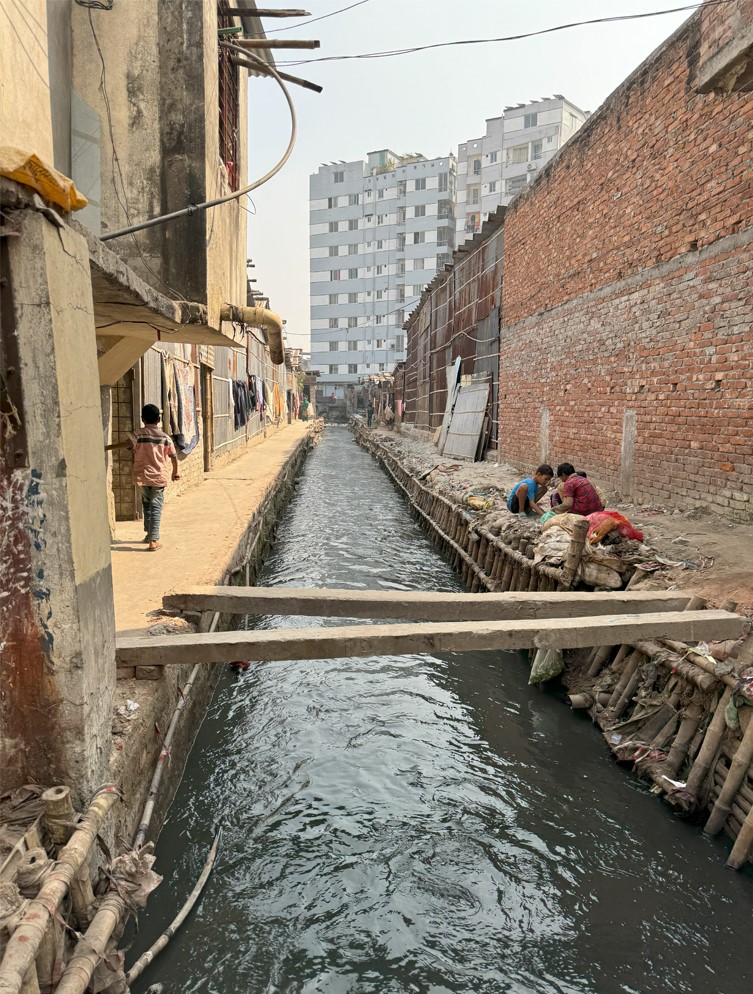
The big worry here is about those faulty containments – looks like a ton of them (and it’s the same story in many South Asian cities) are leaking into the stormwater drains all day long. This is just dumping loads of pathogens into the abutting drains, messing up our surface water sources and adversely affecting public health and environmental. Let’s not forget that these pathogens can multiply in millions while passing through the stagnated drains, often evidenced by the black color of our city drains – a clear sign of adding tons of poison to all our canals and rivers.
Research study on Dhaka's fecal contamination by Nuhu Amin et al., 2019
Stormwater drain adjacent to low-income areas in Dhaka.
The next discussion was on how practical it is to enforce the measure of safe containment (installing a soak pit with containment to prevent any spill over of contamination going towards the drain). A common suggestion was to enforce this along with building byelaws and, with proper monitoring and enforcement, ensure that at least new buildings have such provisions in place. However, the municipality already has so much to oversee, and even with care in the approval stage, it is almost impossible to keep a regular check for any breaches. Imagine at the scale of 20 to 30 thousand houses, one municipality keeping track of any wrong outfall connection. A huge expectation and not practical, right?
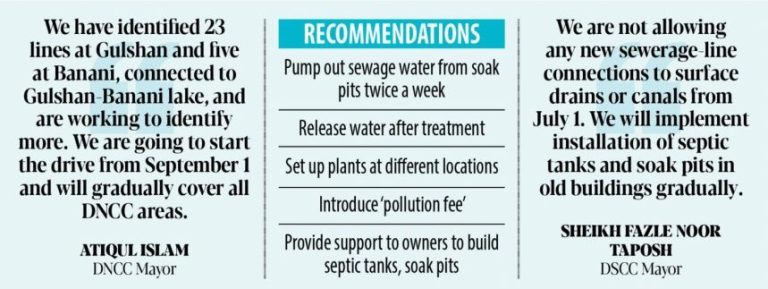
Numerous commitments were made in past but often lack practical enforcement on the ground, as highlighted in the Daily Star's news coverage on July 30, 2022
So, here is what we thought could work: Engage municipal sweepers/sanitation workers, who are typically in adequate numbers, by assigning them the additional responsibility of monitoring and supervising illegal drain outlets, alongside their routine tasks of solid waste collection, street sweeping, drain cleaning, tank emptying, etc.
“Sanitation workers and sweepers are the ideal group to identify such faulty connections since they have been involved in the construction of drains and their job requires them to visit every settlement area of the municipality.”
– Conservancy Inspector, Magura town, Bangladesh
Connections in open drains are clearly visible, while those covered with slabs can be identified during periodic drain cleaning activities. They can also assist in spreading awareness within the community and, with some training, undertake regular soak pit cleaning upon request. The municipality will be responsible for public notification through added regulations, while the task of monitoring and reporting faulty toilet drain outlets will fall to municipal sweepers and sanitation workers. This approach will also grant them the right to access soak pit availability within residential premises. Furthermore, the inspection and identification of faulty outlets could serve as a basis for imposing financial penalties on the users, after a specified timeline set by the municipality. Performance targets could also be explored, with a reward-based mechanism for the sanitation workers.
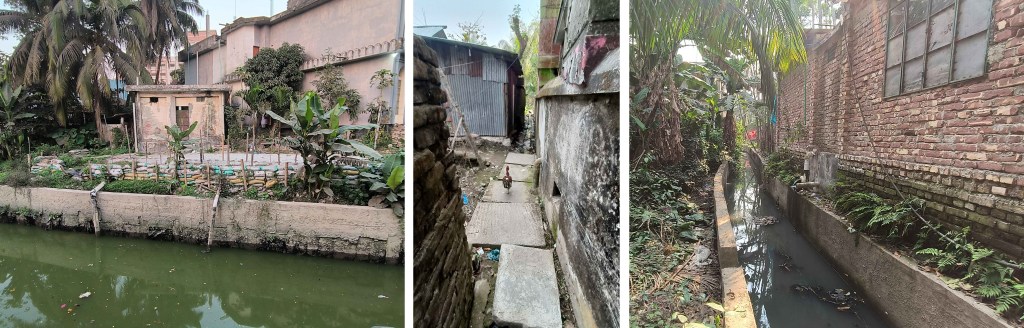
Faulty Connections of Septic Tank Effluent Discharge to the Adjacent Drain
We also observed during the field visit that installing a soak pit alongside a septic tank could necessitate more frequent tank emptying, a situation that presents an opportunity for introducing scheduled desludging. This is particularly relevant in contexts like Bangladesh and Nepal, where municipalities typically achieve higher tax collection efficiencies. Consequently, scheduled desludging would also encompass cleaning of the soak-well. Delving a bit deeper into the tax collection mechanism at the municipal level in Bangladesh, all charges—including those for water, street lighting, and conservancy tax (for solid waste collection)—are consolidated under the holding tax, which forms a significant revenue stream for the municipality. The tax framework further allows for an additional levy of up to 12% (annual value of building and land) for sewerage (or similar interventions), facilitating the possibility of regular tank emptying services at a nominal rate, thereby eliminating the hassle of collecting fees upon service request.
Municiplity Taxation and Collection Rules 2013, Bangladesh
Looking at the big picture, starting with proper containment could be the key to significantly improving the efficiency of the entire sanitation value chain, along with scheduled emptying and an efficient fecal sludge (FS) treatment setup.
With the entire value chain fixed, the non-sewer sanitation solutions can surely be effective in limiting the wastewater pollutions to the surface water bodies. Should be involve sanitation workers as our warriors to accelerate the system efficiency.