

Enhancing WASH in Schools and Healthcare: A Scalable Framework for Change
Problem Statement
While visiting many cities across South Asia and Sub-Saharan Africa as part of our project mandate, a common issue observed was the lack of well-maintained or usable WASH facilities across schools and healthcare centres. Infrastructure presence was evident in many cases, but usability and overall maintenance were largely missing across locations. Global data reveals that as of 2020, 43% of schools worldwide lacked access to basic handwashing facilities[1], and 37% had limited or no sanitation facilities[2]. This affects approximately 818 million children, increasing their vulnerability to preventable diseases and absenteeism. For example, a study in Kenya demonstrated that improved WASH access led to a 58% reduction in the odds of two-week absences among girls, equating to an average decrease of six days per year in absenteeism[3]. In healthcare settings, the situation is equally concerning. A 2022 report by WHO and UNICEF revealed that half of healthcare facilities globally lack basic hygiene services (functional, usable facilities with soap and water), impacting around 3.85 billion people. The World Health Organization (WHO) reports that, on average, 15 out of every 100 patients in low- and middle-income countries acquire at least one healthcare-associated infection (HAI) during their hospital stay. These infections not only prolong hospital stays but also increase morbidity and mortality rates. Although various support programs aim to provide these basic infrastructure facilities, one of the core challenges is ensuring that newly implemented systems are not only functional but also operationally sustainable in the long term. To tackle these challenges, the “Three-Star Approach” (TSA) offers a phased system to progressively enhance WASH infrastructure in a way that is manageable, sustainable, and impactful[4].The Three-Star Approach (TSA): A Phased Path to Improved WASH
The TSA is a structured model for enhancing WASH facilities, designed for schools and healthcare settings. Its phased structure allows institutions to incrementally improve their facilities without overwhelming resources or capacities.
The guiding principle of the TSA is to “Keep it simple, scalable, and sustainable”.


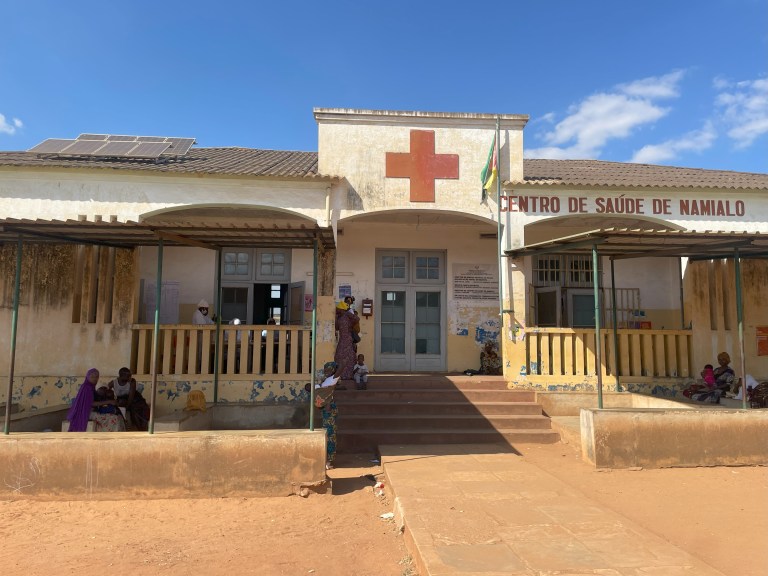
For example, in Mozambique, several project towns under the Small Town Sanitation program are planning to implement the recommended changes following the TSA. In Mocuba, schools are just starting their journey toward basic sanitation standards, with recommendations to install borewells and gender-segregated twin-pit toilets, while students bring water from home until these improvements are complete. Meanwhile, Alto Molocue is progressing adding handwashing stations and menstrual hygiene facilities alongside new borewells and rainwater harvesting systems. In Angoche, where over 4,000 students rely on limited facilities, the installation of additional toilets aims to meet both hygiene and privacy needs. Namialo, facing similar challenges with 6,000 students, is implementing a large-scale upgrade, adding toilets and rainwater harvesting to ensure a stable water supply. Healthcare facilities across these towns are also evolving, with Mocuba and Angoche expanding to offer patient and staff toilets, and accessible hygiene facilities. Through each incremental improvement, these towns are laying a strong foundation for health, dignity, and growth in their communities.
Operation & Maintenance
Effective operation and maintenance (O&M) are the backbone of the TSA initiative, ensuring that WASH facilities remain functional and impactful. Schools and healthcare facilities play pivotal roles in this process, supported by active engagement from students, staff, and community members.
In Schools: Inspired by Japanese practices, where 93% of students participate in daily cleaning, schools can involve students in maintaining cleanliness and functionality. Activities such as water audits, waste segregation drives, and hygiene competitions foster a sense of ownership. Teachers guide these efforts, integrating hygiene into everyday learning through WASH clubs that organize themed activities like handwashing campaigns and waste reduction projects. The WASHaLOT 3.0 is an innovative, prefabricated group handwashing facility designed to promote hygiene practices in schools and communities. It features multiple water outlets designed with scalability (as per group size) and sustainability (reduced water consumption) in mind.
In Healthcare Facilities: The Water and Sanitation for Health Facility Improvement Tool (WASH FIT) is a risk-based management framework providing a structured approach for facilities to assess current conditions, identify hazards, and implement targeted improvements across key areas such as WASH, environmental cleaning, and healthcare waste management. By integrating WASH FIT into routine operations, healthcare facilities can systematically improve service quality, reduce healthcare-associated infections, and promote patient and staff safety. Facility In-Charges and Chief Medical Officers oversee WASH protocols, conducting regular inspections and ensuring feedback systems for staff and patients. Structured training programs for healthcare workers improve compliance with hygiene standards, while Sanitation Committees, comprising healthcare staff, local representatives, and community members, drive long-term sanitation improvements. These committees collaborate with NGOs and government bodies to secure resources and implement innovative solutions.
Monitoring and Benchmarks: Service level benchmarks (SLBs) provide phased targets for continuous improvement. Facilities start by developing model setups within the first two years, achieving 1-star compliance by year three, 2-star compliance by year five, and 3-star compliance by year seven. These benchmarks are tailored to facility needs, ensuring progress is both measurable and achievable. For example, In Mozambique, towns were targeted with building the model facility in 2 years, reaching 100% if schools at One-Star in 4 years, 100% of HCFs at Two-Star in 5 years, and so on.
Awards and Recognition: To inspire excellence, award programs celebrate achievements in WASH maintenance and innovation. Schools receive accolades for best-maintained classrooms, while healthcare facilities are recognized for exceptional hygiene protocols. At the community level, wards or neighbourhoods are rewarded for collective sanitation achievements, fostering a culture of pride and accountability. Recognition is also clubbed with financial incentives and training programs to further boost involvement.
Through collaborative and continuous efforts, effective O&M ensures that WASH infrastructure remains a catalyst for better health, education, and community well-being.

Success Stories from the Past
The TSA has shown a wide range of success stories in countries like Kenya—which saw a 35% reduction in schools’ absenteeism, Egypt and Colombia—which saw a 41% and 20% reduction for the same[5]. Bhutan and Philippines both have adopted the TSA in combination with the WASHFIT tool to better manage operations in healthcare facilities[6]. Madagascar has adopted the 3-star approach, with 208 schools and 77 HCFs meeting national standards[7].
Future Outlook
The three-star approach serves as a robust tool for monitoring and enhancing WASH performance in schools and healthcare facilities. Scaling this framework to broader levels—be it town, province, or state—can drive continuous improvement, inspire sustainable management practices, and foster the adoption of innovative solutions based on proven success stories. By encouraging facilities to maintain and improve their ratings, this approach not only ensures better hygiene and sanitation infrastructure but also encourages facilities to sustain their ratings through consistent operations and management.
[1] WHO, 2020
[2] JMP, 2023
[3] IRC WASH
[4] The TSA is modelled keeping in mind the UNICEF and GIZ, 2013 and the WHO, 2022 approach in WASHFIT
[5] Field Guide: The Three Star Approach for WASH in Schools prepared by UNICEF & GIZ
[6] WASH FIT: A Practical Guide for Improving Quality of Care Through Water, Sanitation, and Hygiene in Health Care Facilities, SECOND EDITION, WHO, 2022
[7] WASH and OR+ Thematic Report, UNICEF, 2019