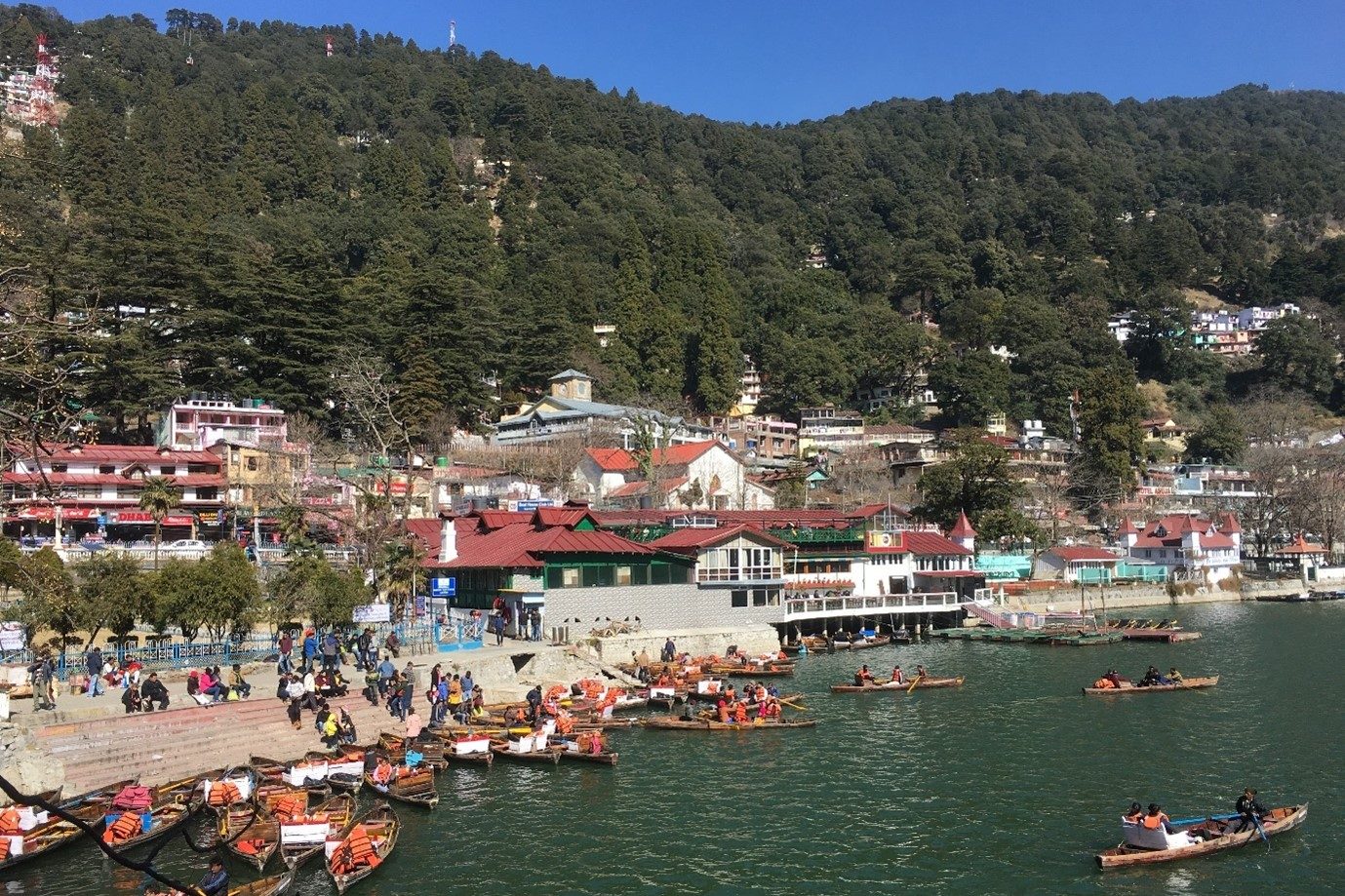

Uttarakhand, located in Northern India, boasts a varied landscape, dominated by 86% mountainous regions and 65% forest cover, contributing to its ecological richness. With a population of approximately 10 million as of the 2011 census, around 70% reside in rural areas. The state is a thriving tourist destination, ranking 12th in India for its tourist influx, thanks to its abundance of natural resources—glaciers, rivers, dense forests, and snow-capped peaks. The town is situated in the Dun Valley, at the confluence of the Ganga and Yamuna rivers. Uttarakhand is also abundant in mineral deposits like limestone, marble, rock phosphate, dolomite, copper, and gypsum. The state’s 25,294 small-scale industries provide employment to 63,599 individuals, contributing to its economic landscape.
BMGF & NMCG
February, 2023
Uttarakhand, India
Launched in 2014 by the Indian government, the ‘Namami Gange Programme’ is a dedicated effort to combat pollution in the revered Ganga River and restore its ecological health. A critical facet of this endeavour is the adoption of innovative strategies to comprehensively address wastewater pollution.
The project’s focus revolves around conducting a techno-economic feasibility study for sanitation treatment pilot project at the block level, with an emphasis on rural settlements in Uttarakhand. This approach is intricately woven into the broader objective of revitalizing the Ganga River. By targeting wastewater issues, the program aims to rejuvenate the river, safeguarding its significance to the environment and countless communities. With an eye on sustainability, it aspires to create a cleaner, healthier Ganga for future generations.
The project embarked on the development of a comprehensive decision-making framework to systematically rank blocks throughout Uttarakhand, enabling the establishment of block-level treatment plants.
In the assessment phase, the project carefully culminated in the finalization of pilot locations. This step was crucial in the project's planning to make sure that block-level treatment plants are set up in the most strategic way.
A comprehensive techno-economic feasibility study was conducted to justify the investment in the proposed treatment plant technology, ensuring that it aligns with the project's objectives and resources.
Scenario analysis was carried out to compare the benefits of block-level treatment plants combined with transfer stations against settlement-level treatment plants operating without any transfer stations as collection points.
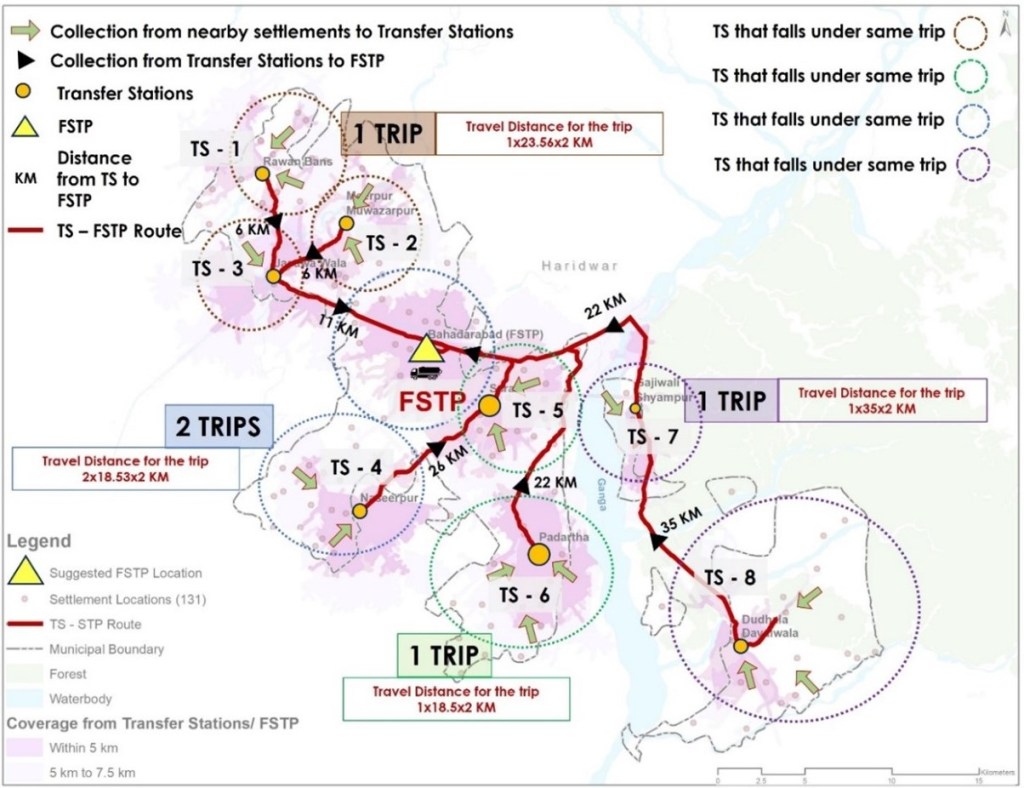
One notable project recommendation was the establishment of an omni-processor treatment plant, accompanied by a total of eight transfer stations. These facilities were designed to serve the identified pilot block of Bahadarabad in the Haridwar district.
The project's economic assessment incorporated a health and environmental cost-benefit analysis to gauge the impact of the proposed investment, particularly in terms of the broader benefits conferred upon the local community.
The desludging roadmap provides a comprehensive system designed to enhance operational efficiency, reduce transportation expenses, and guarantee the appropriate treatment and disposal of faecal sludge. This roadmap also includes details about the operator type, truck capacity, number of trips, and faecal sludge treatment plant capacity, offering a clear and comprehensive understanding of the sanitation chain.